

Introduction: The Race Against Chemical Decay
In the quiet corners of high school storage rooms and the humid basements of family homes, a silent chemical clock is ticking. For decades, 16mm and Super 8 films have served as the primary vessels for our collective and personal histories—capturing everything from momentous historical events to the Friday night lights of small-town high school football. However, these celluloid memories are under siege by "vinegar syndrome," a process of acetate film base degradation that literally turns history into acid.
For David Stein, a software engineer and film preservationist, this race against time became personal. What began as a quest to find footage of his father’s high school football games evolved into a sophisticated engineering project that bridges the gap between 1920s mechanical precision and modern computational power. By leveraging the Raspberry Pi 5 and custom-built hardware, Stein has developed a DIY film scanner capable of professional-grade preservation at a fraction of the commercial cost, ensuring that the ghosts of the past are not lost to chemical rot.
Main Facts: The Engineering of Preservation
The core of Stein’s achievement lies in the successful integration of disparate technologies to solve a high-cost problem. Professional film digitization is notoriously expensive, often costing upwards of $200 per 400-foot reel. When Stein discovered dozens of decaying reels at his father’s former high school in Pittsburgh, the financial barrier to saving them was insurmountable through traditional means.
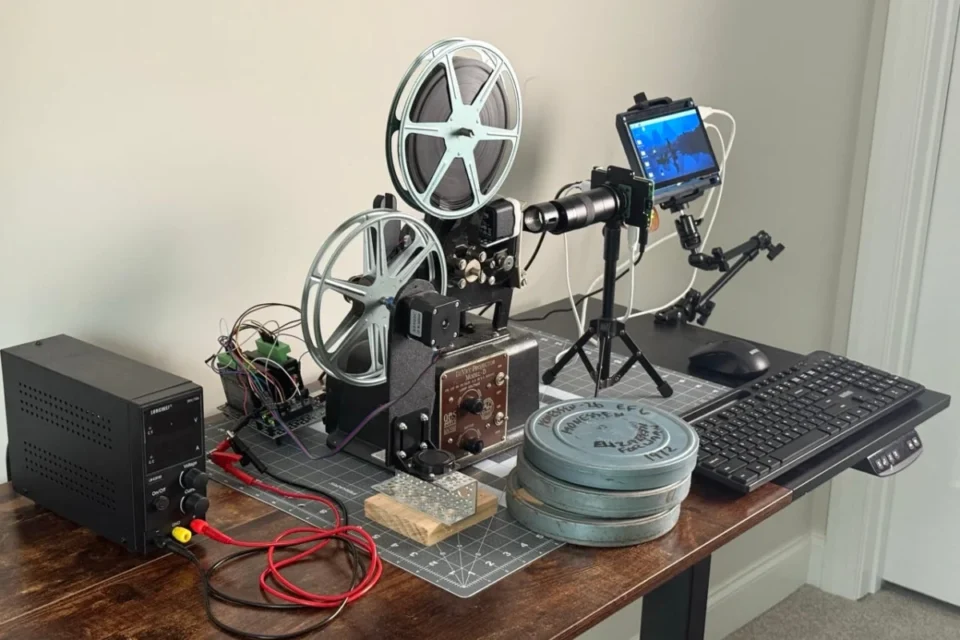
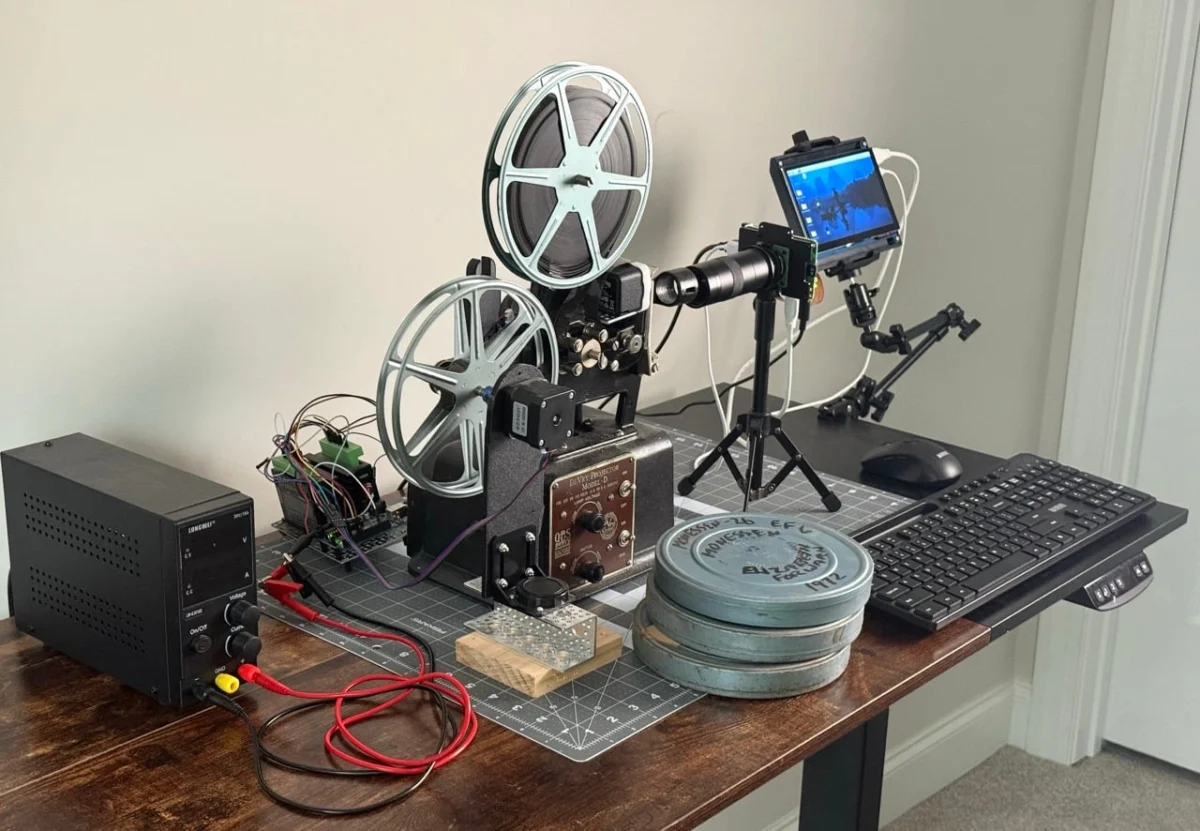
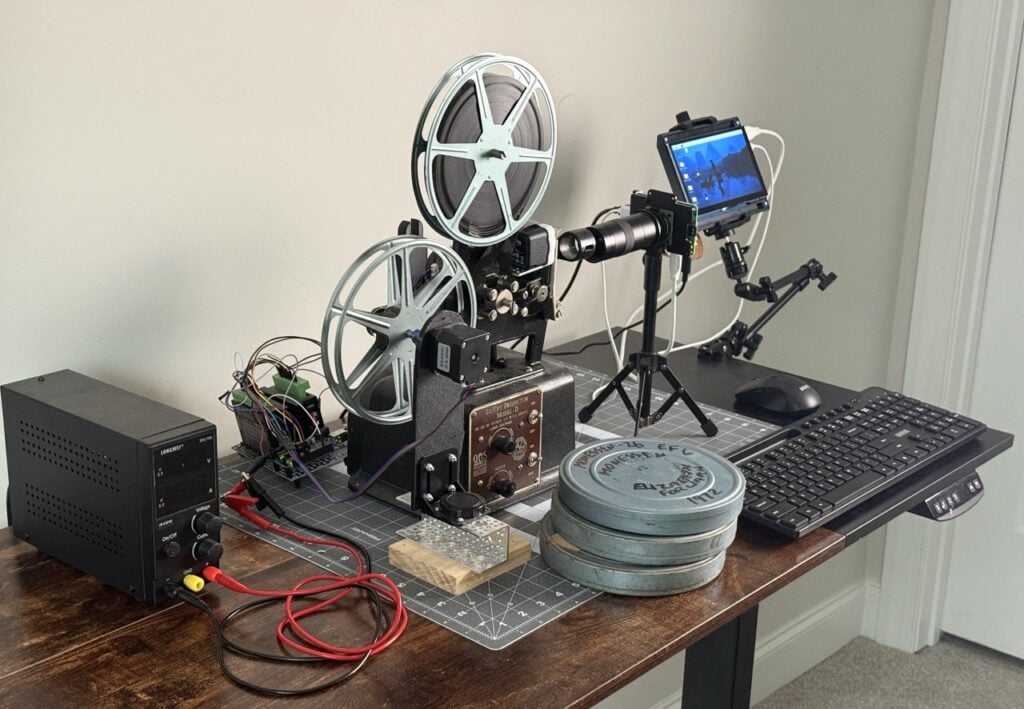
To bypass this, Stein constructed a custom scanner utilizing a Raspberry Pi 5 as the primary "brain." The system is built around a modified 1928 film projector, which serves as the transport mechanism. Unlike modern high-speed scanners that can be rough on fragile, brittle film, the vintage projector was designed to handle celluloid with extreme care.
Key technical specifications of the build include:
- Processing Power: Raspberry Pi 5 (upgraded from a Pi 4 for increased throughput).
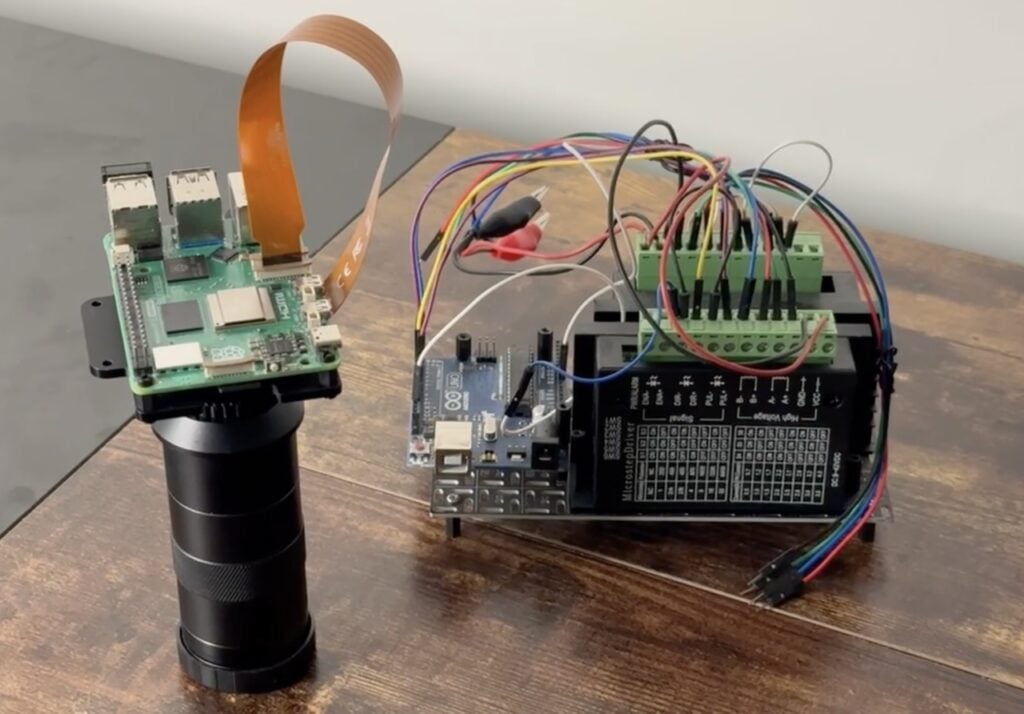
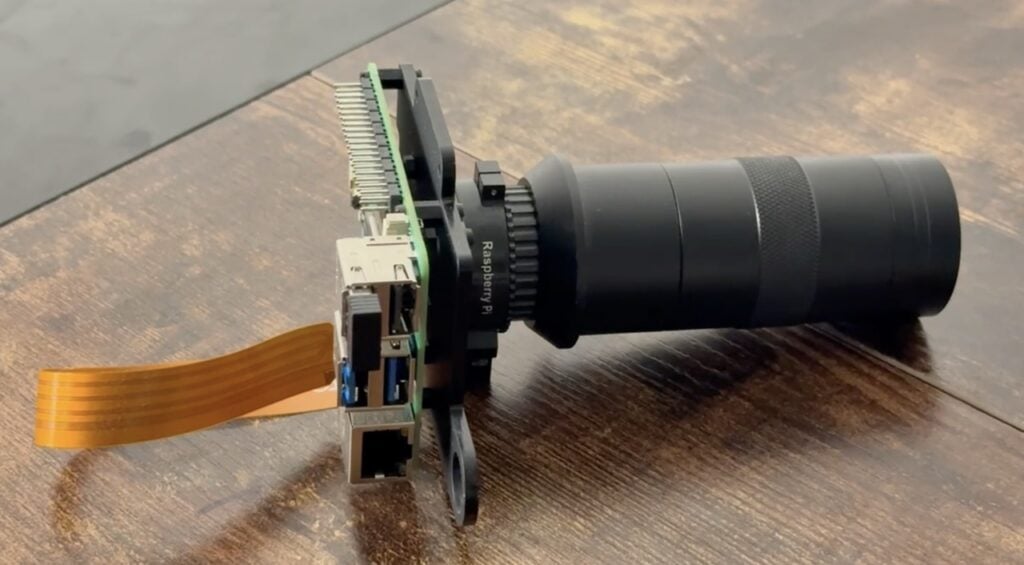
- Imaging: Raspberry Pi High Quality (HQ) Camera paired with a specialized microscope lens for macro-detail.
- Motion Control: An Arduino microcontroller managing two TB6600 drivers to control the transport and take-up reels.
- Workflow Efficiency: A reduction in scan time from 18 hours per reel (on the Pi 4) to just 4 hours (on the Pi 5).
Chronology: From Hunting Reels to High-Speed Scanning
The Initial Discovery
The project’s origins date back to Stein’s search for his father’s athletic legacy. While some footage had been preserved by his grandfather on Super 8 and other 16mm reels had been donated to the Heinz History Center in Pittsburgh, significant gaps remained. Stein’s investigation eventually led him to a storage room at the high school, where he found a cache of abandoned reels.
The discovery was bittersweet; while the footage existed, the reels were "rotting." The tell-tale scent of vinegar—acetic acid—signaled that the film was in the advanced stages of vinegar syndrome. If not digitized soon, the images would warp, shrink, and eventually become unplayable.
Version 1.0: The Proof of Concept
Stein’s first iteration of the scanner was built using a Raspberry Pi 4. This version operated on a "stop-and-shoot" principle. The machine would move the film by a single frame, stop, trigger the camera to take a high-resolution still image, and then move to the next frame.
While the quality was high, the efficiency was low. A standard 400-foot reel of 16mm film contains approximately 16,000 individual frames. Under the Pi 4 architecture, capturing a single reel took more than 18 hours of continuous operation. This "frame-by-frame" method was a bottleneck that made large-scale preservation projects nearly impossible for a solo maker.
Version 2.0: The Raspberry Pi 5 Breakthrough
The release of the Raspberry Pi 5 provided the computational overhead necessary to move from static image capture to "overcranking" or continuous motion capture. By upgrading the hardware, Stein was able to transition to a system where the film runs non-stop at eight frames per second (fps).
The Pi 5 captures continuous video at 30 fps. Because the film is moving at 8 fps while the camera records at 30 fps, the system captures multiple images of every single frame of film. Using a five-millisecond exposure time, the camera "freezes" the film mid-pulldown, preventing motion blur. This transition reduced the processing time by over 75%, bringing the duration down to a manageable four hours per reel.
Supporting Data: Technical Workflow and Post-Processing
The hardware is only half of the story; the digital pipeline is what allows the DIY scanner to rival professional results. Stein’s system uses a sophisticated software stack to handle the massive amount of data generated during a scan.
The Capture Phase
The Arduino handles the physical movement, implementing a ten-second "soft ramp" when the motors start. This gradual acceleration is critical for vintage film, as sudden jerks can snap the brittle leader or tear the sprocket holes. The film is moved at a steady 8 fps, while the Raspberry Pi HQ camera records in 60-second segments.
The Extraction Phase
Once the raw video is captured, Stein employs FFmpeg, an open-source multimedia framework, and a custom Python pipeline. The challenge of continuous capture is that not every captured video frame aligns perfectly with the film’s physical frames.
The Python script analyzes the groups of images captured for each film frame. It identifies the "pulldown" (the moment the film is moving) and discards those blurred images. It then selects the sharpest, most centered image from each group to represent that specific frame of film. This ensures that even though the film never stopped moving, the resulting digital file looks as though it were captured on a high-end, intermittent-motion scanner.
Chemical Context: The Vinegar Syndrome
The urgency of Stein’s work is backed by archival science. Vinegar syndrome is autocatalytic; once it begins, the release of acetic acid speeds up the decay of surrounding film. According to the Image Permanence Institute, once a film reaches a certain level of acidity, its lifespan drops from decades to just a few years. Stein’s DIY approach provides a "triage" solution for films that are too far gone for expensive commercial labs to risk putting on their $100,000 machines.
Official Responses and Project Recognition
While this began as a private family project, Stein’s work has garnered significant attention from both the "Maker" community and professional tech media. As the founder of Eight by Two Films, Stein has transitioned from a hobbyist to a recognized film preservationist and software engineer.
His work has been highlighted by major publications such as The Verge, Popular Mechanics, and Nerdist, where experts have praised the project for its democratization of archival technology. The "Maker" community has pointed to Stein’s build as a prime example of the Raspberry Pi 5’s capabilities in high-bandwidth data processing and real-time hardware control.
The Heinz History Center, which holds some of the original school films, represents the traditional archival side of this narrative. While institutions do their best to preserve history, Stein’s project highlights a growing trend: the "citizen archivist." When official institutions lack the funding or bandwidth to digitize every local artifact, DIY engineers like Stein step in to fill the gap.
Implications: The Democratization of History
The implications of Stein’s Raspberry Pi scanner extend far beyond football highlights. This project represents a shift in how we value and preserve local history.
The Emotional Value of "Seventeen Again"
The most profound impact of the project is the human connection. The athletes captured in these 16mm reels are now in their 70s. For many, this footage represents the only surviving visual record of their youth. Stein notes that when these men watch the digitized footage, "it’s as though they’re seventeen again for a few minutes."
The project has fostered new community bonds; Stein reports that he has made new friends among the former players, some of whom call him periodically just to reminisce about the games. This highlights the role of technology not just as a tool for data storage, but as a medium for intergenerational storytelling.
A Blueprint for Other Archivists
By documenting his process and using accessible components like the Raspberry Pi, Arduino, and Python, Stein has provided a blueprint for others to follow. There are thousands of high schools, local historical societies, and families across the globe with "vinegar" film sitting in boxes.
Stein’s success proves that:
- Cost is no longer an absolute barrier: A functional, high-quality scanner can be built for a few hundred dollars plus the cost of a vintage donor projector.
- Modern hardware is sufficient: The Raspberry Pi 5’s ability to handle high-speed video processing makes it a viable heart for industrial-style applications.
- Fragile media can be handled safely: Using 1920s mechanical parts ensures that the physical integrity of the film is respected, even as it is brought into the digital age.
As we move further into the 21st century, the window for rescuing 20th-century analog media is closing. Projects like David Stein’s film scanner offer a glimmer of hope that our personal and local histories won’t just fade away into the smell of vinegar, but will instead be preserved for the next generation of viewers to discover.